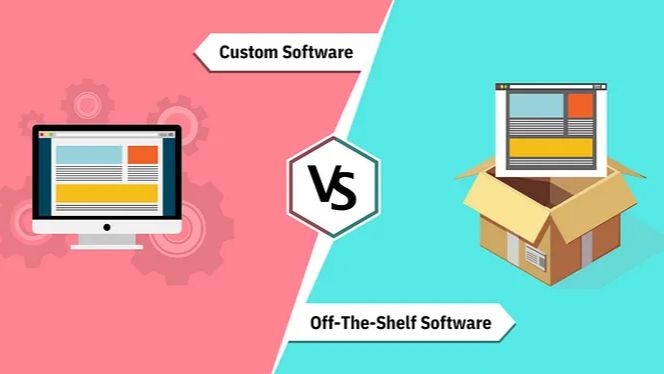
Custom Software vs Off-the-Shelf Solutions: What’s Better for Business?
A comprehensive 2026 guide to help businesses make informed software investment decisions
In 2026, choosing between custom software and off-the-shelf solutions isn’t just a technology decision—it’s a strategic business choice that impacts your operational efficiency, competitive positioning, scalability, and long-term profitability. With global IT spending projected to reach $5.61 trillion this year, understanding which software approach aligns with your business goals has never been more critical.
Whether you’re a startup looking to validate your business model, a growing company hitting the limits of packaged software, or an enterprise seeking competitive differentiation, this comprehensive guide will help you make an informed decision based on real-world data, total cost of ownership analysis, and proven business outcomes from 2026.
Key Insight: Many successful organizations in 2026 use a hybrid strategy—off-the-shelf for commodity functions and custom software for competitive differentiators. This optimizes cost, speed, and strategic value while avoiding the “all-or-nothing” trap that many businesses fall into.
What is Custom Software?
Custom software, also known as bespoke software, is developed specifically to meet the unique needs of your business. Rather than adapting your processes to fit generic software, custom solutions are built around how your team actually works, your data models, your workflows, and your competitive advantages.
Key Characteristics of Custom Software
- Tailored to Your Workflows: Built specifically for your business processes, ensuring perfect alignment with operational needs
- Complete Control: Full ownership of source code, data architecture, and future development roadmap
- Scalability by Design: Architected with your growth assumptions from the start
- Competitive Differentiation: Enables unique capabilities that competitors cannot easily replicate
- Deep Integration: Seamlessly connects with existing systems without middleware complexity
Real-World Custom Software Examples
Major companies like Amazon, Netflix, Uber, and Spotify rely on custom software for their core operations. Amazon’s proprietary recommendation engine, Netflix’s content delivery algorithms, Uber’s routing optimization, and Spotify’s personalization systems are all custom-built platforms that provide competitive advantages impossible to achieve with off-the-shelf solutions.
What is Off-the-Shelf Software?
Off-the-shelf software, commonly referred to as COTS (Commercial Off-The-Shelf) or SaaS (Software as a Service) in 2026, consists of pre-built applications designed to serve a broad range of users with common business needs. These standardized solutions address general functionality across industries.
Key Characteristics of Off-the-Shelf Software
- Ready for Immediate Use: Quick deployment with minimal setup required
- Proven Solutions: Tested by thousands of users with mature feature sets
- Regular Updates: Vendors provide automatic updates and new features
- Lower Initial Cost: Development costs shared across many customers
- Support Infrastructure: Documentation, help desks, training materials, and user communities
Popular Off-the-Shelf Examples
Common examples include Salesforce (CRM), Microsoft 365 (productivity suite), QuickBooks (accounting), Shopify (e-commerce), Slack (team communication), Zendesk (customer support), and HubSpot (marketing automation). These tools serve millions of businesses effectively for standardized functions.
The Real Cost Comparison: Beyond Upfront Pricing
Understanding true costs requires analyzing Total Cost of Ownership (TCO) over 5+ years, not just initial investment. Many businesses discover that custom software becomes more cost-effective after 2-4 years when factoring in all expenses.
Custom Software Cost Breakdown
Initial Development Investment
- Simple applications: $50,000 – $150,000
- Medium complexity: $150,000 – $300,000
- Enterprise platforms: $300,000 – $1,000,000+
Ongoing Costs
- Annual maintenance: 15-25% of development cost
- Infrastructure hosting: $500 – $5,000/month
- Feature additions: Variable based on scope
- Security updates: Included in maintenance
Off-the-Shelf Software Cost Breakdown
Subscription Fees
- Basic plans: $10 – $100 per user/month
- Professional plans: $100 – $300 per user/month
- Enterprise plans: $300 – $1,000+ per user/month
Hidden Costs Often Overlooked
- Customization: $50,000 – $200,000 for significant modifications
- Integration: $20,000 – $100,000 to connect with existing systems
- Training: $5,000 – $50,000 for team onboarding
- Data migration: $10,000 – $100,000 when switching platforms
- Unused features: Paying for functionality you never use
TCO Reality Check: A company with 100 users paying $200/month for SaaS ($240,000/year) will spend $1.2 million over 5 years, plus customization and integration costs. Custom software costing $400,000 upfront with $60,000 annual maintenance totals $640,000 over the same period—a savings of $560,000.
Comprehensive Feature Comparison
| Factor | Custom Software | Off-the-Shelf |
|---|---|---|
| Initial Cost | High ($50K – $1M+) | Low ($10 – $300/user/month) |
| Time to Deploy | 3-12 months | Immediate to 1 week |
| Customization | ✓ Complete flexibility | ✗ Limited options |
| Scalability | ✓ Designed for your growth | ✗ Pricing scales with users |
| Integration | ✓ Native, deep integration | ✗ API-dependent, limited |
| Competitive Edge | ✓ Unique capabilities | ✗ Same as competitors |
| Data Ownership | ✓ Complete control | ✗ Vendor-controlled |
| Security Control | ✓ Full customization | ✗ Vendor standards only |
| Long-term Cost | Predictable, fixed | Increases annually |
| Vendor Lock-in | ✓ No dependency | ✗ High dependency |
Strategic Decision Framework: When to Choose Each Approach
Choose Custom Software When:
1. Your Workflow Drives Competitive Advantage
If your unique business processes are what differentiate you from competitors, custom software protects and enhances that advantage. You cannot buy a competitive edge off a shelf that your competitors also have access to.
2. Off-the-Shelf Can’t Meet 50%+ of Requirements
When you’re forcing standard software to fit your needs with extensive workarounds, spreadsheets, and manual processes, you’re already paying for custom software—just in staff time, errors, and productivity losses.
3. You Need Deep System Integration
Connecting 5+ existing systems requires native, reliable integrations that reflect real operational needs. Custom software eliminates middleware complexity and data inconsistencies.
4. Long-term TCO Favors Custom
For growing companies, custom software typically breaks even at 2-4 years and becomes significantly cheaper over 5-10 years when subscription costs, user growth, and customization expenses are factored in.
5. Regulatory Compliance is Critical
Industries with strict regulations (healthcare HIPAA, financial SOC 2, GDPR compliance) benefit from full control over data security, audit trails, and compliance features that packaged software may not adequately address.
Choose Off-the-Shelf Software When:
1. You Need Speed Over Customization
When rapid deployment matters more than perfect fit, off-the-shelf solutions get you operational immediately. Ideal for startups validating business models or temporary solutions.
2. Standardized Functions Are Sufficient
For commodity business functions like accounting, email, document storage, or basic HR management, proven off-the-shelf solutions work well without reinventing the wheel.
3. Limited Budget and Resources
Businesses with under $50,000 software budgets and limited technical teams benefit from managed SaaS solutions that don’t require in-house maintenance.
4. You’re Still Defining Requirements
If you’re uncertain about exact needs, starting with off-the-shelf allows you to try before committing to custom development. You can always migrate later once requirements crystallize.
5. Software Isn’t Your Core Competency
When technology supports but doesn’t define your business, leveraging proven external solutions lets you focus resources on your actual competitive advantages.
The Hybrid Strategy: Best of Both Worlds
In 2026, the most successful organizations don’t choose “all custom” or “all off-the-shelf”—they strategically combine both approaches to optimize cost, speed, and competitive value.
Hybrid Approach Example: E-commerce Business
Custom Software Components:
- Product recommendation engine (competitive advantage)
- Dynamic pricing system (proprietary algorithms)
- Custom checkout flow (optimized conversion)
- Inventory management (integrated with suppliers)
Off-the-Shelf Components:
- Email marketing (Mailchimp)
- Customer support (Zendesk)
- Accounting (QuickBooks)
- Team collaboration (Slack)
Result:
60% cost savings on support functions while maintaining unique competitive advantages in core business operations. This hybrid strategy delivers $200,000+ annual savings compared to building everything custom or forcing off-the-shelf solutions where they don’t fit.
AI Integration: A Game-Changer for Both Approaches
In 2026, the debate isn’t just about custom versus off-the-shelf—it’s also about which approach better enables AI and automation capabilities that drive business value.
Custom Software AI Advantages
Custom solutions allow you to train AI models on your proprietary data without vendor constraints. Your data architecture is designed for your intelligence needs, enabling:
- Proprietary AI-powered features competitors can’t replicate
- Clean, connected data optimized for machine learning
- Full control over AI model training and deployment
- Integration with agentic AI workflows
Off-the-Shelf AI Limitations
SaaS platforms often lock your data in proprietary formats, making it difficult to train internal AI models effectively. You’re limited to the AI features the vendor provides, which your competitors also have access to.
2026 Reality: Automation and agentic AI work best when you give them clean, connected data. Companies with custom data architectures gain 3-5x more value from AI investments compared to those constrained by off-the-shelf data models.
Your Decision Framework: 5 Critical Questions
Use this framework to evaluate which approach aligns with your business strategy:
Question 1: Does Your Business Process Provide Competitive Advantage?
YES: Lean toward custom software to protect and enhance your differentiation
NO: Consider off-the-shelf solutions for standardized functions
Question 2: Can You Adapt Your Processes to Fit Standard Software?
YES: Off-the-shelf likely works without major compromises
NO: Custom software recommended to preserve operational excellence
Question 3: Is Your Budget Over $50,000 and Timeline Over 3 Months?
YES: Custom software is viable and may provide better long-term ROI
NO: Start with off-the-shelf, evaluate custom development later as you grow
Question 4: Do You Need Deep Integration with 5+ Existing Systems?
YES: Custom software provides native integrations without middleware complexity
NO: Off-the-shelf with standard integrations may suffice
Question 5: Is Your Growth Trajectory Steep?
YES: Custom software scales without per-user pricing increases
NO: Off-the-shelf subscription model remains affordable
Decision Guideline: If 3+ answers favor custom software, invest in custom development for long-term competitive advantage. If 3+ answers favor off-the-shelf, start with SaaS solutions and re-evaluate as your business matures. Mixed results suggest a hybrid approach optimizes both cost and capability.
Common Mistakes to Avoid
Mistake 1: Choosing Based Only on Upfront Cost
Off-the-shelf looks cheaper initially, but subscription fees, customization costs, and per-user pricing often make it more expensive over 3-5 years. Always calculate 5-year TCO, not just year-one costs.
Mistake 2: Forcing Square Pegs into Round Holes
The “workaround tax” is real. When teams export data, paste into spreadsheets, re-enter into multiple systems, and use shadow IT tools just to make software work, you’re already paying custom software prices—in staff time and errors.
Mistake 3: Ignoring Vendor Lock-in Risk
Dependence on a single SaaS provider for critical business functions creates vulnerability. Vendors can raise prices 15%+ annually, discontinue features, or change terms with little recourse on your part.
Mistake 4: Underestimating Integration Complexity
Connecting off-the-shelf solutions with existing systems often costs $20,000 – $100,000 and creates ongoing maintenance burden. Custom software integrates natively by design.
Mistake 5: Not Planning for AI and Data Strategy
In 2026, your software architecture determines how effectively you can leverage AI. Off-the-shelf platforms that lock data in proprietary formats severely limit your future AI capabilities.
Frequently Asked Questions
Development timelines vary by complexity. Simple applications take 3-4 months, medium complexity projects require 4-8 months, and enterprise platforms need 8-12+ months. However, with modern development practices, AI-assisted coding, and low-code frameworks, custom development is 40% faster than it was five years ago.
Agile methodology allows you to launch MVP versions in 2-3 months and iterate based on user feedback, reducing time-to-market significantly.
Yes, absolutely. Many successful companies start with off-the-shelf solutions to validate their business model, then migrate to custom software as they grow and their unique requirements become clear. The key is planning for this transition by choosing off-the-shelf solutions with good data export capabilities.
Migration typically takes 3-6 months and costs $50,000 – $200,000 depending on data complexity and integration requirements. A phased approach where you gradually migrate modules reduces risk.
For most growing companies, custom software breaks even at 2-4 years when compared to off-the-shelf total cost of ownership. The break-even point comes sooner when:
- You have 50+ users (per-user SaaS pricing adds up quickly)
- You require extensive customization of off-the-shelf tools
- You need complex integrations with existing systems
- Your industry has high SaaS subscription costs
After breaking even, custom software provides ongoing cost savings of 40-60% compared to continuing with off-the-shelf subscriptions.
Annual maintenance typically costs 15-25% of the initial development investment. For a $200,000 custom application, expect $30,000 – $50,000 per year for:
- Bug fixes and security updates
- Infrastructure hosting and monitoring
- Minor feature enhancements
- Performance optimization
- Technical support
This predictable cost structure contrasts with off-the-shelf solutions where subscription fees increase 5-15% annually and scale with user growth.
Custom software offers more security control, not inherently better security. With custom development, you can:
- Implement specific compliance requirements (HIPAA, SOC 2, GDPR)
- Control data location and access completely
- Audit source code for vulnerabilities
- Customize security protocols for your risk profile
- Avoid shared infrastructure vulnerabilities of SaaS platforms
However, this requires expertise. Off-the-shelf solutions from reputable vendors provide professional security that many small businesses cannot replicate in-house. For highly regulated industries or businesses with unique security requirements, custom software’s control advantages are significant.
Most startups should start with off-the-shelf solutions for non-core functions and invest in custom software only for features that provide competitive differentiation. This hybrid approach optimizes capital allocation.
Use off-the-shelf for: Email, accounting, team communication, customer support, marketing automation
Build custom for: Your core product, proprietary algorithms, unique user experiences, or workflows that competitors shouldn’t be able to replicate
As you validate product-market fit and secure funding, selectively migrate to custom software for strategic functions where control and differentiation justify the investment.
Yes, modern custom software is built with integration in mind. Experienced development teams design custom applications to connect seamlessly with popular SaaS platforms through:
- RESTful APIs and webhooks
- OAuth authentication for secure connections
- Real-time data synchronization
- Automated workflows between systems
This is precisely why the hybrid approach works so well—custom software handles your unique requirements while integrating with proven off-the-shelf tools for standardized functions. Your custom platform becomes the central hub connecting everything together.